
Branding a $6M+ cause: Taking over Union Station to defeat dementia
Imagine being amongst thousands of enthusiastic cyclists on the Gardiner and DVP, peddling for one cause: Defeating Dementia. On June 2, 2024, over 10,000 riders of all ages biked Toronto’s highways, raising funds for Baycrest’s groundbreaking dementia research. As Lead Designer on BIKE for Brain Health, I was responsible for elevating a beloved fundraising event into a city-wide initiative that spanned Union Station to the streets of Toronto.
Campaign Design
8-10 weeks
Designed digital OOH and display ads across transit shelters, digital superboards, and Union Station.
Ensured brand consistency across environments through robust implementation of brand guidelines.
Developed key concepts around campaign messaging for prospective and retargeting audiences.
Challenge
Nearly 50% of BIKE’s riders were first-timers: cycling enthusiasts with no real connection to the cause.
Baycrest needed to engage first-time participants without alienating high-value donors and corporate teams who'd been active participants and sponsors for years.
The BIKE brand had begun to stretch as deliverables increased: more touchpoints, more channels, more potential for inconsistency.
Results
BIKE’s 2024 campaign generated 354M+ impressions across all channels.
Display and Digital OOH creatives contributed to 10.9K total conversions with a blended digital ROAS of $6.63.
The Union Station takeover alone drove 44M impressions at a $0.75 CPM (a 140% over-delivery) with digital conversions increasing 45% during its flight week.
354M
$6M
10,000
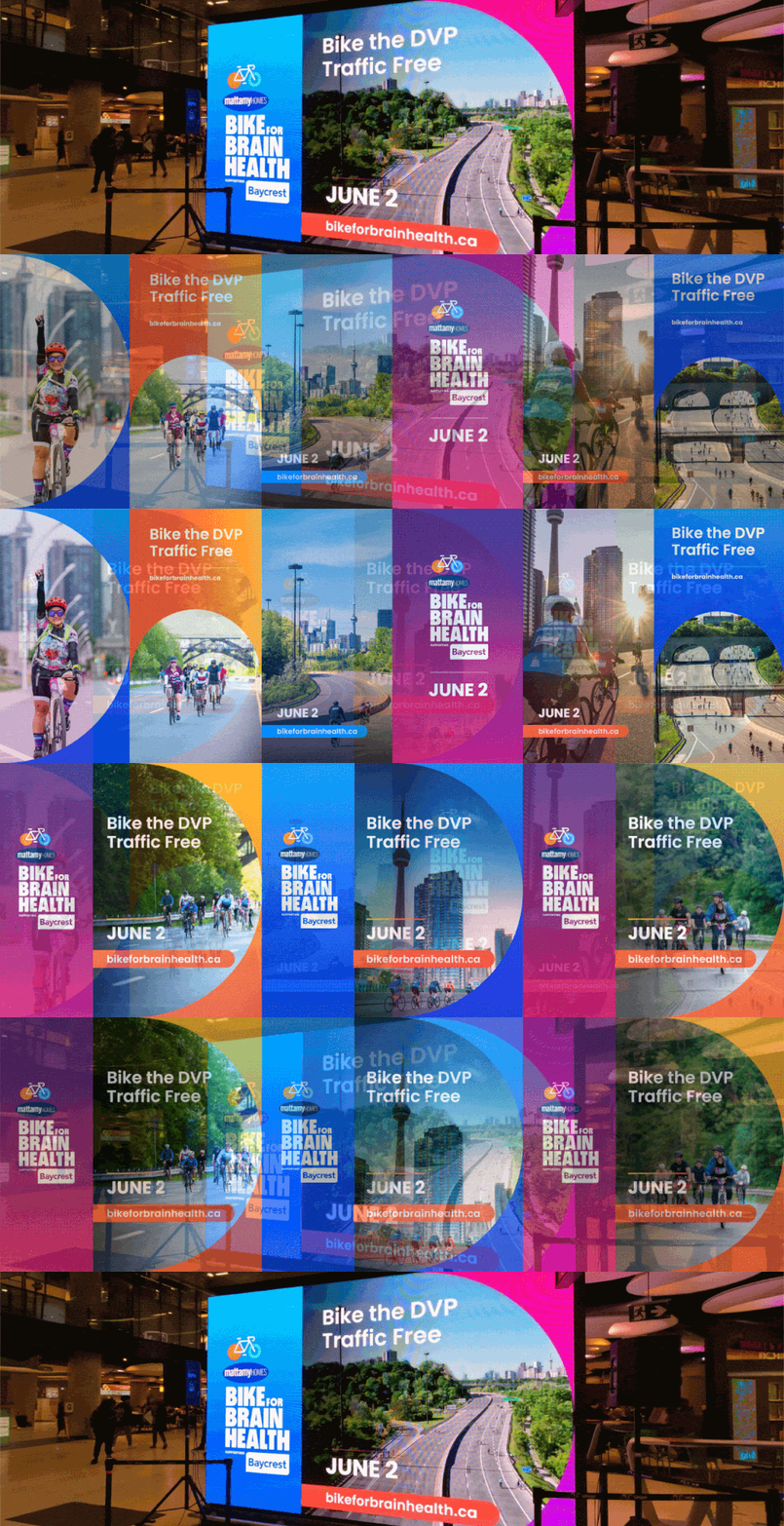
BIKE Union Station takeover
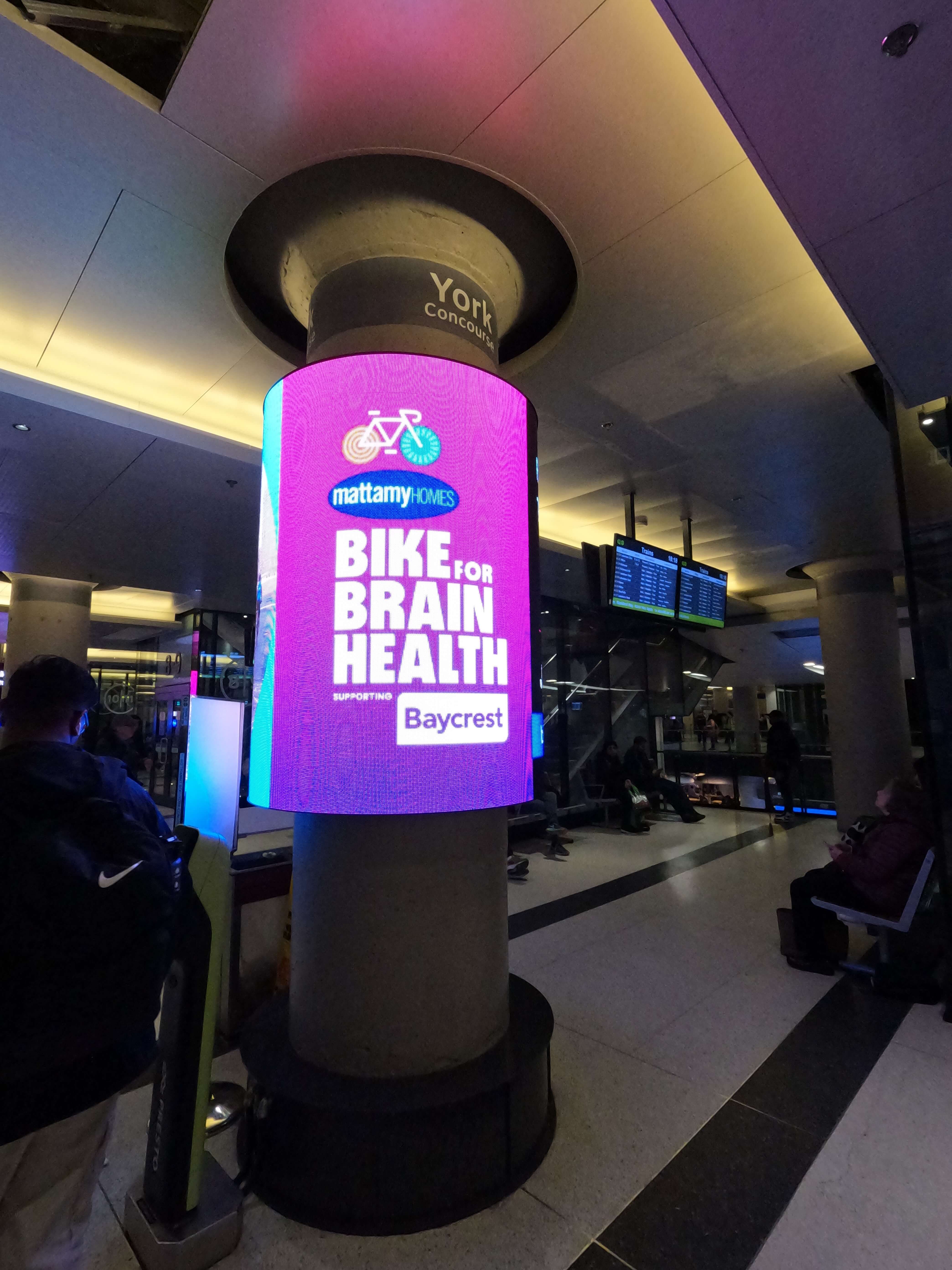
York Concourse ad


BIKE creative territory

BIKE OOH creative
Process
Built the campaign around a unifying message:
We extended the brand guidelines to be scalable and flexible enough for everything from the 50-screen Union Station takeover down to a pair of socks. Our branding was impactful, inclusive, and high-contrast: built for transit places where you've got two seconds of someone's attention. Wherever a participant encountered the brand, from the first ad to event day to the finish line, it needed to feel like the same experience.
What changed:
Participation scaled without losing credibility.
Brand awareness increased while preserving trust.
Brand consistency improved across all touchpoints.

Campaign system overview
Insight
Previously, the event was framed as a challenge, making new riders apprehensive about whether they belonged. We needed to shift our framing from an intimidating, challenge-focused view of BIKE to one focused on participation and impact. This led to The Ultimate 1-Day Bike Ride.

Event day map

Bike plate for PedalPalooza

BIKE sticker
Conclusion
While the Union Station takeover did wonders to boost BIKE’s brand awareness, there were more opportunities to raise awareness of Baycrest’s valuable work and convert potential donors. A more deliberate journey for Baycrest’s major donors would be a game-changer for future BIKEs. Along with this: virtual event walkthroughs, interactive venue maps, and acknowledgment of the donor’s contribution in shaping the landscape of brain aging research.